Research Overview
Our research focuses on understanding the molecular and cellular mechanisms underlying fibrotic diseases and cancer, with an emphasis on lung and kidney fibrosis, as well as lung cancer and renal cell carcinoma (RCC). We investigate how dysregulated immune responses, metabolic reprogramming, and signaling pathways drive disease initiation, progression, and therapeutic resistance.
In fibrosis, our work centers on the dynamic interactions between immune cells and stromal compartments that shape tissue remodeling. Using our interstitial lung disease (ILD) biobank, patient-derived samples, and advanced multi-omics approaches, we study how immune microenvironments, fibroblast activation, and metabolic alterations contribute to the progression of idiopathic pulmonary fibrosis (IPF) and the transition from acute kidney injury (AKI) to chronic kidney disease.
In cancer, we explore how key signaling regulators and metabolic vulnerabilities promote tumor growth, metastasis, and immune evasion. Our studies have identified critical pathways, including MARCKS-mediated signaling and MTAP-associated metabolic reprogramming, that influence tumor progression and response to therapy in lung cancer and RCC.
To support these efforts, we have developed innovative ex vivo platforms that preserve tissue architecture and enable investigation of immune–tissue interactions and therapeutic responses in a physiologically relevant context. By integrating molecular, cellular, and translational approaches, our goal is to identify novel therapeutic targets and advance precision medicine strategies for fibrosis and cancer.
Fibrosis Research
Lung Fibrosis
Our research focuses on elucidating the molecular and cellular mechanisms driving lung fibrosis, with a particular emphasis on idiopathic pulmonary fibrosis (IPF). Using patient-derived samples and advanced spatial and multi-omics approaches, we have demonstrated that fibrotic lesions are highly heterogeneous and can be broadly classified into immune-rich (“hot”) and immune-poor (“cold”) microenvironments. These distinct regions exhibit different biological programs, with immune-rich lesions characterized by proliferative and immune-activated pathways (e.g., PI3K/AKT, mTOR, NF-κB), while immune-poor lesions display classical profibrotic signaling such as TGF-β and epithelial–mesenchymal transition. These findings suggest a dynamic progression of fibrosis shaped by immune–stromal interactions.
We further investigate the role of fibroblast biology and metabolic reprogramming in fibrosis. Our studies have identified argininosuccinate synthase 1 (ASS1) deficiency as a key driver of fibroblast activation, promoting proliferation, migration, and survival through pathways such as Src–STAT3 signaling. In parallel, we uncovered a novel role for inositol metabolism in regulating fibrogenic signaling networks, where inositol supplementation attenuates fibroblast invasiveness and reduces fibrotic remodeling in preclinical models. These findings highlight the importance of metabolic pathways in shaping fibrotic responses.
In addition to intrinsic cellular mechanisms, our work explores environmental and signaling factors that exacerbate fibrosis. We have shown that tobacco smoke activates receptor tyrosine kinases such as AXL, leading to enhanced fibroblast proliferation and invasiveness. Targeting AXL signaling effectively suppresses these pathogenic phenotypes. Moreover, we identified the MARCKS–PI3K/AKT signaling axis as a critical regulator of myofibroblast differentiation and fibrosis progression. Pharmacological inhibition of this pathway reduces fibroblast activation and synergizes with existing antifibrotic therapies.
Together, our research reveals that lung fibrosis is driven by complex interactions among immune cells, fibroblasts, metabolic pathways, and environmental stimuli. By integrating spatial profiling, molecular biology, and translational models, we aim to identify novel therapeutic targets and develop more effective strategies for the treatment of IPF.

Acute Kidney Injury and Kidney Fibrosis
Our research investigates the molecular and immunological mechanisms underlying acute kidney injury (AKI) and its progression to chronic kidney disease (CKD) and fibrosis. Using clinically relevant models such as cisplatin-induced nephrotoxicity and ischemia–reperfusion (I/R) injury, we focus on how immune dysregulation, metabolic stress, and cell death pathways drive renal damage and repair outcomes.
We have demonstrated that the immune microenvironment plays a critical role in AKI pathogenesis. In cisplatin-induced AKI, we observed increased infiltration of CD4⁺ T cells and macrophages, accompanied by a reduction in regulatory T cells, indicating a shift toward a pro-inflammatory state. Importantly, we identified the immune checkpoint protein PD-L1 as a key regulator of this response. Loss of PD-L1 in renal tubular epithelial cells exacerbates kidney injury, whereas restoration of PD-L1 expression confers renoprotective effects, highlighting a novel immune-modulatory therapeutic strategy.
Our work also uncovers the importance of metabolic reprogramming and regulated cell death in renal injury. We showed that cisplatin disrupts glutathione (GSH) metabolism, leading to both apoptosis and ferroptosis via activation of IL6/JAK/STAT3 signaling. Targeting this pathway or restoring redox balance effectively mitigates renal tubular damage. In parallel, we identified a critical ferroptosis regulatory axis in I/R injury, in which autophagy-mediated degradation of the deubiquitinase OTUD5 leads to destabilization of GPX4, a key antioxidant enzyme. Restoration of OTUD5 preserves GPX4 levels, suppresses ferroptosis, and promotes renal recovery.
In addition to intrinsic cellular mechanisms, our studies highlight the role of intercellular communication in driving fibrosis progression. We discovered that platelet-derived thrombospondin-1 (THBS1) promotes the emergence of a proliferative, profibrotic macrophage subset (“cycling M2”) during the repair phase. This macrophage population contributes to maladaptive repair and fibrosis, whereas inhibition of THBS1 signaling reduces macrophage-driven fibrotic remodeling and improves kidney outcomes.
Together, our research reveals that AKI and kidney fibrosis are governed by complex interactions among immune responses, metabolic pathways, and cell death programs. By integrating multi-omics technologies with functional models, we aim to identify novel therapeutic targets and develop strategies to prevent the transition from acute injury to chronic fibrosis.

Cancer Research
MARCKS Signaling in Cancer
Our research explores the role of myristoylated alanine-rich C kinase substrate (MARCKS) as a key regulator of cancer progression, with a focus on its phosphorylation-dependent signaling mechanisms. We have demonstrated that phosphorylated MARCKS (phospho-MARCKS) is significantly elevated in multiple cancer types, including lung cancer and renal cell carcinoma, and is associated with increased tumor aggressiveness and poor patient survival.
Using genetic and pharmacological approaches, we have established that MARCKS phosphorylation promotes cancer cell proliferation, migration, metastasis, and therapeutic resistance. Mechanistically, phospho-MARCKS enhances oncogenic signaling pathways, particularly the PI3K/AKT and mTOR axes, by modulating phosphoinositide dynamics and downstream signaling activity. In lung cancer, we further identified that phospho-MARCKS contributes to resistance to targeted therapies such as EGFR inhibitors, highlighting its role in treatment failure.
Our work also reveals that MARCKS acts as a critical mediator linking environmental exposures to tumor progression. In the context of cigarette smoke, we showed that MARCKS phosphorylation activates NF-κB signaling through disruption of its interaction with NF-κB–activating protein (NKAP), leading to increased expression of pro-inflammatory cytokines, epithelial–mesenchymal transition (EMT), and cancer stem-like properties. These findings underscore the role of MARCKS in integrating inflammatory and oncogenic signaling pathways.
Importantly, we have developed peptide-based strategies to target MARCKS activity. A peptide, MPS, which inhibits MARCKS phosphorylation or function, effectively suppress tumor growth, metastasis, and signaling pathway activation in preclinical models. In addition, targeting MARCKS enhances the efficacy of existing therapies, including EGFR inhibitors in lung cancer and multi kinase inhibitors in renal cell carcinoma, demonstrating strong potential for combination treatment strategies.
Together, our research identifies MARCKS as a central signaling hub in cancer progression and a promising therapeutic target. By integrating molecular biology, proteomics, and translational models, we aim to develop novel strategies to overcome drug resistance and improve outcomes for patients with cancer.

MTAP in Cancer
Our research investigates the role of methylthioadenosine phosphorylase (MTAP) as a critical regulator of metabolic reprogramming and tumor–immune interactions in cancer. We have demonstrated that MTAP deficiency is a common feature of aggressive malignancies, including renal cell carcinoma (RCC) and lung cancer, and is associated with higher tumor grade and poor patient survival. Functionally, loss of MTAP promotes cancer cell invasion, migration, and epithelial–mesenchymal transition, highlighting its role as a tumor suppressor.
Mechanistically, our studies reveal that MTAP loss drives oncogenic signaling through dysregulation of protein methylation and phosphorylation networks. In MTAP-deficient cancer cells, we identified activation of the IGF1R–Src–STAT3 signaling axis as a key driver of tumor progression. Targeting this pathway with selective inhibitors not only suppresses tumor cell invasiveness but also enhances therapeutic sensitivity, suggesting a vulnerability that can be exploited for treatment.
In addition to tumor-intrinsic signaling, we have uncovered a critical role for MTAP in shaping the tumor immune microenvironment. MTAP deficiency promotes immune evasion by upregulating immune checkpoint molecules such as PD-L1 and reprogramming cytokine networks to suppress anti-tumor immunity. These changes lead to reduced infiltration and activity of cytotoxic immune cells, including T cells and natural killer cells, and contribute to the formation of an immunologically “cold” tumor microenvironment.
Furthermore, our work identifies metabolic dependencies associated with MTAP loss as actionable therapeutic targets. We found that MTAP-deficient tumors exhibit increased reliance on glutamate metabolism, and inhibition of this pathway selectively impairs tumor growth. Importantly, targeting glutamate metabolism can also restore immune signaling, including the expression of chemokines such as CXCL10, thereby enhancing immune cell recruitment and improving responsiveness to immunotherapy.
Together, our research establishes MTAP deficiency as a central driver of both oncogenic signaling and immune suppression in cancer. By integrating metabolic, signaling, and immunological perspectives, we aim to develop novel strategies that target MTAP-associated vulnerabilities to improve cancer treatment outcomes.

Experimental Platforms – Precision-Cut Tissue Slice
To better model complex disease biology and accelerate translational research, we have developed innovative ex vivo platforms that preserve tissue architecture while enabling controlled investigation of cellular interactions. These systems bridge the gap between traditional in vitro models and in vivo studies by maintaining key features of the tissue microenvironment, including structural integrity, cellular heterogeneity, and dynamic immune interactions.
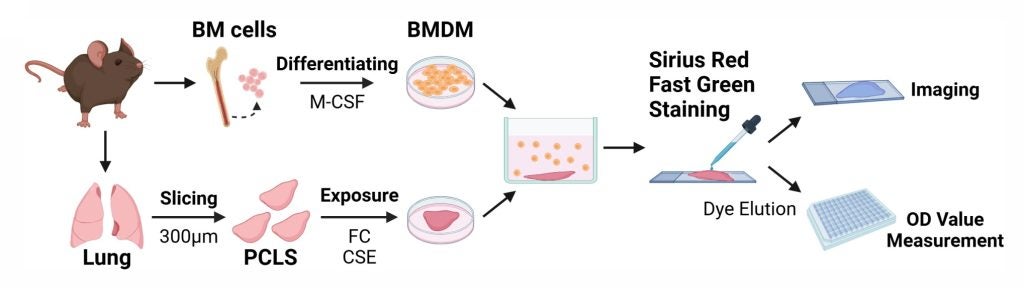
In lung fibrosis research, we established a novel autologous precision-cut lung slice (PCLS)–immune co-culture platform that incorporates both tissue-resident and recruited immune cells. By integrating autologous bone marrow–derived macrophages with injured lung tissue, this model recapitulates key processes of inflammation, immune cell recruitment, and fibrotic remodeling. Using this system, we demonstrated enhanced macrophage infiltration, increased fibroblast activation, and augmented collagen deposition in response to fibrotic stimuli such as cigarette smoke extract and profibrotic signaling cues. This platform enables mechanistic studies of immune–stromal interactions and provides a powerful tool for evaluating macrophage-targeted therapeutic strategies in pulmonary fibrosis.
In parallel, we developed a patient-derived precision-cut tumor slice (PCTS) co-culture platform for cancer research. This system preserves the native tumor microenvironment, including tumor architecture and cellular diversity, while allowing integration with autologous peripheral blood mononuclear cells (PBMCs). The platform supports functional assessment of immune–tumor interactions and therapeutic responses in a controlled ex vivo setting. By enabling evaluation of treatment efficacy and immune modulation in patient-derived tissues, this approach offers a valuable tool for translational cancer studies and precision medicine applications.
Together, these platforms provide versatile and physiologically relevant systems to study disease mechanisms, immune interactions, and therapeutic responses across fibrosis and cancer. By combining patient-derived samples with advanced co-culture strategies, our work aims to improve the predictive power of preclinical models and facilitate the development of targeted therapies.